You can take a screenshot in Playwright with the page.screenshot() method. Use the path argument to choose where Playwright saves the image.
Before running the examples, install Playwright and the Chromium browser:
python3 -m pip install playwright
python3 -m playwright install chromium
Take a Screenshot with Playwright
Create a file named screenshot.py and add the following code:
from playwright.sync_api import sync_playwright

with sync_playwright() as playwright:
    browser = playwright.chromium.launch(headless=True)
    page = browser.new_page()
    page.goto("https://www.scrapingbee.com/")
    page.screenshot(path="screenshot.png")
    browser.close()
Run the script:
python3 screenshot.py
The script creates screenshot.png, containing the visible portion of the ScrapingBee homepage:
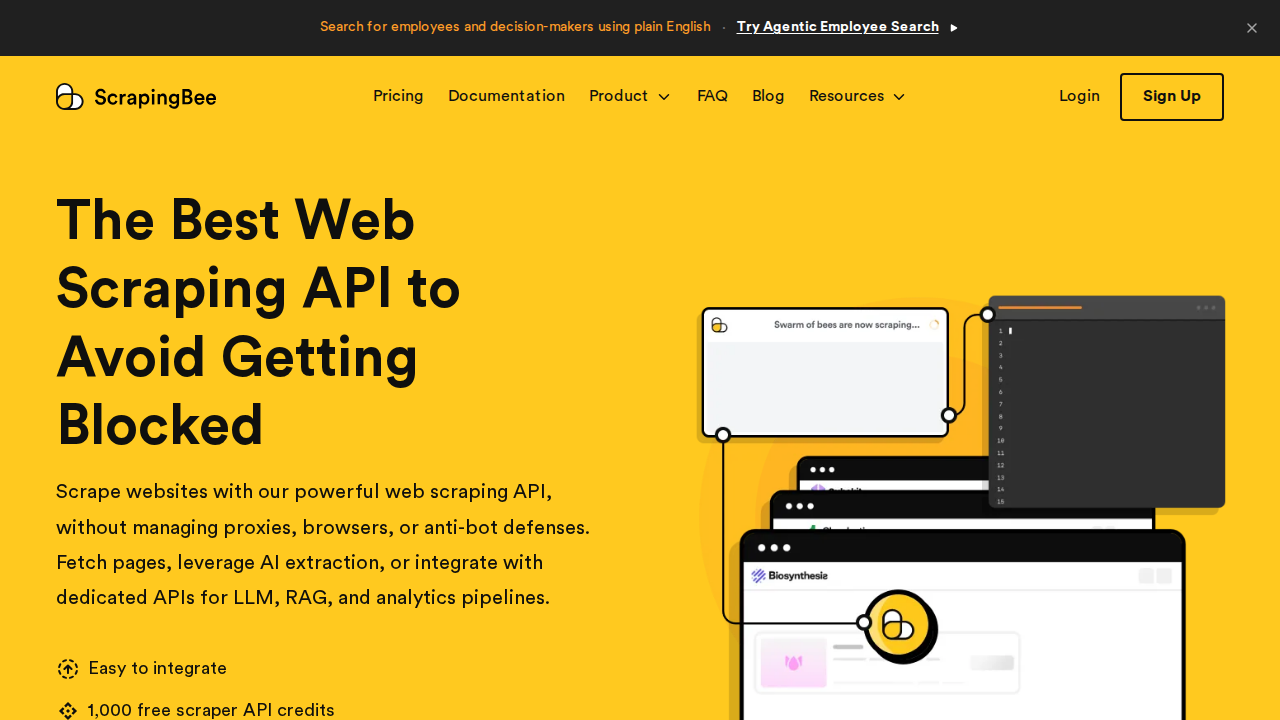
Playwright saves the screenshot in the current working directory unless you provide another path.
You can confirm that the file was created with:
ls screenshot.png
Output:
screenshot.png
Take a Full-Page Screenshot
By default, Playwright captures the visible viewport. To capture the entire page, set full_page=True:
page.screenshot(path="full-page.png", full_page=True)
This creates full-page.png, containing the entire page instead of only the visible viewport.